

Why an IOP After Inpatient Treatment is the Right Move
Life after completing inpatient residential treatment for addiction can be filled with questions, uncertainties, and trepidation. While inpatient treatment is an excellent first step to take on your road to recovery from drug or
alcohol addiction, it’s not a cure-all. That’s why it’s crucial you have a solid post-inpatient-treatment plan in place. Otherwise, all of your hard work could unravel quickly as you step back into your “normal” life.
After completing drug or alcohol addiction treatment in an inpatient facility, enrolling in an intensive outpatient program (IOP) is the next best step. While you might think you’ve officially learned how to control your addiction after rehab, you still have to learn how to live life outside of the facility’s walls.
What is an IOP?
An IOP, or intensive outpatient program, is often referred to as a “step-down treatment” to help those who have completed treatment at an inpatient facility. Of course, you don’t have to have been in residential treatment before you enroll in an IOP, but when it comes to drug or alcohol addiction treatment, if you are coming from inpatient care, your next best step would be an IOP.
Unlike inpatient programs, IOPs allow you to use the necessary learned skills and coping techniques while living your life at home, going to work, school, and social events. While in an IOP, you’ll attend group therapy sessions along with individual and possibly family sessions. Depending on your needs, your intensive outpatient program may also include medication management.
Benefits of an IOP after Inpatient Treatment
The first weeks, months, or even years after completing drug or alcohol addiction treatment in a residential facility can be challenging. All of the triggering places, people, and situations surrounding your addicted lifestyle are removed during inpatient treatment.
But they are still there once you complete your inpatient rehabilitation stay.
That’s why enrolling in an IOP is the right move immediately after you finish treatment. You not only need the structure of an intensive outpatient program to keep you focused, but you benefit significantly from your group of peers and assigned therapist.
Here’s what you’ll gain from a high-quality IOP like ours here at BOLD Health:
1. Individualized Treatment Plan
At BOLD Health, we know your journey to addiction and recovery isn’t going to look like everyone else’s. When you enroll in an IOP, you get a personalized treatment plan designed to fit your life and address your individual needs.
After drug or alcohol addiction treatment at an inpatient facility, your IOP will focus heavily on learning the skills you need to prevent relapse and living your new substance-free life. The number of therapy sessions, duration of treatment, any necessary medications, and which therapist you meet with are all tailored specifically to you.

2. Valuable Connection with Others
Getting the much-needed help for your addiction is 100% the right move. But, unfortunately, due to the negative mental health stigma in our society, admitting you have an addiction and then seeking help may leave you feeling alone and ashamed.
DON’T BE.
One of the most valuable takeaways of getting treatment through rehab, an IOP, and drug and alcohol counseling, aside from the skills you need to stop unwanted behaviors, is that you will connect with others going through similar situations. You will know and feel that you are not alone in your struggles, perhaps for the first time.
3. Personal Development
Your intensive outpatient program includes valuable group therapy sessions. Here, you’ll not only connect with each other, relate to similar struggles, and gain support, but together, you can pinpoint the areas in each other’s lives where you may need additional support and guidance.
You and your group of peers, along with your assigned therapist, can discuss ways of developing happiness outside of your addiction – not just in your sobriety but in all aspects of your life.
4. Better Shot at Staying Sober
Relapse doesn’t have to be your story after inpatient treatment. But if you don’t have the necessary tools and skills you need to prevent it, then your chances of relapse increase. After you’ve detoxed from drugs or alcohol, you need support and guidance, especially in those first few months.
Because IOPs include individual and group therapy, along with medication management (if needed), you have access to the support you need to live your life after alcohol or drugs.
You can think of it this way: inpatient programs help you detox with round-the-clock care and support. After that, you still need to gain the tools and skills to continue living a sober lifestyle. And that’s where an IOP comes in.
“Is an IOP Right for Me?”
Once you finally admit you need help for your drug or alcohol addiction and you start searching “alcohol counseling near me,” don’t immediately assume you know the steps you need to take. While it may be okay for you to enroll in an IOP directly, that may not be your course of treatment.
An IOP is right for you if:
- Your addiction is not so severe that you require an inpatient detox (Learn more about how we can help with outpatient detox.)
- You are transitioning out of a residential treatment program
- Your work or family obligations make it difficult for you to be away for long periods, but you still need help to recover from addiction (BOLD has evening and daytime tracks to accommodate your schedule.)
If you need help determining your level of treatment, you can ask your doctor or give us a call. We’ll be happy to point you in the right direction.
The important thing is that you are seeking help. And that’s the first step in the road to recovery.
Best Intensive Outpatient Program (IOP) in San Diego County

Improve Your Chances of Addiction Recovery Through Our IOP
Whether you are looking for drug or alcohol recovery options for yourself or a loved one, our team of mental health and addiction treatment professionals is ready to guide you. We’ll give you everything you need to know about our intensive outpatient program for addiction recovery.
Our holistic approach provides comprehensive health from substance abuse disorders. We tailor each patient’s IOP to meet their needs and support them along the way. You or your loved one won’t “graduate” from our IOP until you are ready. That’s because we’re committed to giving you the best chance of recovery.
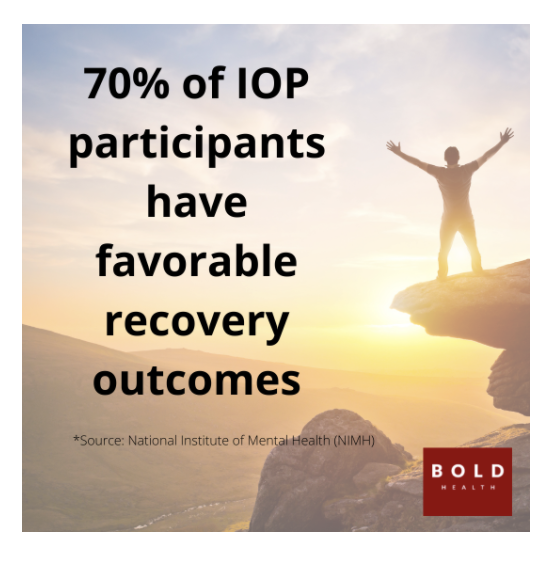
Our IOP and alcohol treatment in San Diego is warm, welcoming, and full of compassionate and qualified mental health professionals, ready to help.
Don’t wait. Contact us today. Recovery is possible.
9 Comments
[…] 4 Reasons Why an IOP After Inpatient Treatment is the Right Move […]
[…] of the most significant benefits of an outpatient addiction treatment program is that you don’t have to leave your job, home life, and social life behind for an extended stay […]
[…] triggers: This one is crucial. If you are in a quality recovery program like our IOP at BOLD Health, our addiction specialists will help you identify your triggers. You have to know what these are […]
[…] excellent benefit of IOPs is that they include individual, group, and optional family therapy sessions and medication […]
[…] Related Post: Why an IOP After Inpatient Treatment is the Right Move […]
[…] Why an IOP After Inpatient Treatment is the Right Move […]
[…] Why an IOP After Inpatient Treatment is the Right Move […]
[…] Why an IOP After Inpatient Treatment is the Right Move […]
[…] Why an IOP After Inpatient Treatment is the Right Move […]